Welcome to the official website of Hebei Qisen Paper Co., Ltd!

- Hotline
- 13932198700
- 13932198700

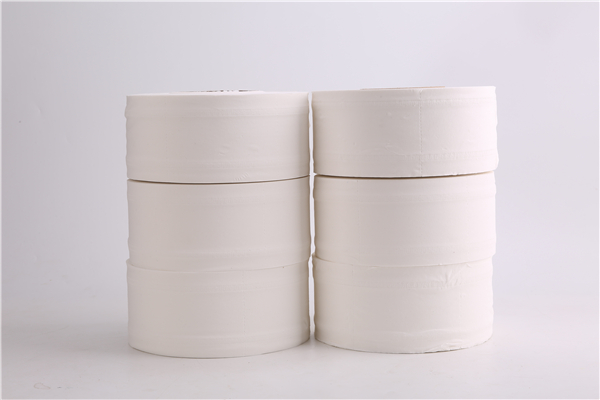
The raw materials for commercial toilet paper are mainly divided into two categories: virgin pulp and recycled pulp. Recycled pulp can be used in commercial scenarios, but products that meet national standards must be selected, and adaptability should be judged based on specific usage scenarios.
1、 Core raw material types of commercial toilet paper
Commercial scenarios have higher requirements for the "cost" and "durability" of toilet paper, and the selection of raw materials will focus more on cost-effectiveness. There are mainly three types:
Native wood pulp: made from unprocessed wood as raw material, with long fibers, low impurities, fine paper and strong toughness, and is not easy to shed fibers. Commercial toilet paper produced from this type of raw material has a good user experience and is suitable for scenarios with high quality requirements, such as high-end hotels and office buildings. However, the cost is relatively high, and the price per roll is usually 1.5-2 times that of recycled pulp products.
Native bamboo pulp: a sub category of native pulp, made from bamboo as raw material, with natural antibacterial properties, short growth cycle of bamboo, and strong environmental friendliness. Its toughness and water absorption are similar to that of virgin wood pulp, making it suitable for commercial scenarios that focus on environmental protection and have quality requirements, such as chain restaurants and mid to high end office buildings, with slightly lower costs than virgin wood pulp.
Recycled pulp (waste paper pulp): made from recycled waste paper (such as discarded cardboard boxes, newspapers, ordinary waste paper, etc.) as raw materials, processed through processes such as crushing, deintercalation, bleaching, etc. Its fibers are short, impurities are high, and the cost is only about half of that of virgin pulp. It is the main raw material for low-priced commercial toilet paper and is suitable for cost sensitive, high-frequency use, but low quality requirements scenarios.
2、 Can recycled pulp toilet paper be used in commercial scenarios?
It can be used, but it needs to meet the two prerequisites of "compliance" and "adaptation scenario", otherwise there will be risks:
Must comply with national standards and reject "three no" products:
Priority should be given to recycled pulp products labeled with GB/T 20810 (standard for household and similar toilet paper, commonly used in commercial scenarios). This standard has strict restrictions on the total number of bacterial colonies, fluorescent whitening agents, impurities, etc. As long as they meet the standards, they can basically ensure safe use and can be used in scenarios such as wiping hands, wiping tabletops, etc. that do not come into direct contact with delicate skin.
Never choose recycled pulp products without execution standards, raw material labeling, or manufacturers. This type of product may use substandard materials such as medical waste paper and contaminated waste paper. If not thoroughly disinfected during processing, it may contain residual heavy metals, bacteria, or excessive fluorescent agents. Long term use can easily irritate the skin and even cause health problems.
Determine adaptability based on commercial scenarios to avoid misuse:
Suitable for use in areas with high foot traffic, cost sensitivity, and simple cleaning needs, such as factory workshops (wiping hands and tool surfaces), public restrooms in shopping malls (only used for toilet cleaning), and temporary activity areas (for short-term use).
Not suitable for use in areas with high hygiene and quality requirements, such as dining kitchens (direct contact with food related tools, prone to contamination), hotel guest room bathrooms (affecting customer experience), hospitals (requiring higher hygiene standards to avoid cross infection risks).

Copyright © 2025 Hebei Qisen Paper Co., Ltd. Copyright XML Power By :JiNanZhongYuWangLuo